| BOGLEECH.COM PRESENTS: The Natural Origins of Pokémon |
Pokémon! The franchise that had Nintendo rolling in cash and introduced the world to several
hundred evolving battle-monsters with superpowers. Once dismissed by many as a passing fad,
the enduringly popular franchise was originally cooked up by once unknown artist Satoshi Tajiri,
whose passion for monsters and insect collecting inspired his "pocket monsters" concept many
years before he would get caught up in the gaming business. None could have predicted its
explosive success, and the world as we know it has never been the same. At least, it's been the
same except for several generations growing up knowing the "Team Rocket" motto, and that's good
enough for me.
An interesting thing about the Japanese school system is how much value they put into biology.
Whereas millions of Americans grow up each year shamefully unaware of what an Opabinia looks
like, our eastern friends treat the far reaches of Earth's flora and fauna as a staple of children's
homework. The (obviously intentional) result of this is that animals most westerners consider
"obscure" are given the star treatment for countless Anime, Manga, and Videogames...
hundred evolving battle-monsters with superpowers. Once dismissed by many as a passing fad,
the enduringly popular franchise was originally cooked up by once unknown artist Satoshi Tajiri,
whose passion for monsters and insect collecting inspired his "pocket monsters" concept many
years before he would get caught up in the gaming business. None could have predicted its
explosive success, and the world as we know it has never been the same. At least, it's been the
same except for several generations growing up knowing the "Team Rocket" motto, and that's good
enough for me.
An interesting thing about the Japanese school system is how much value they put into biology.
Whereas millions of Americans grow up each year shamefully unaware of what an Opabinia looks
like, our eastern friends treat the far reaches of Earth's flora and fauna as a staple of children's
homework. The (obviously intentional) result of this is that animals most westerners consider
"obscure" are given the star treatment for countless Anime, Manga, and Videogames...
In brackish mud flats, mangroves and riverbanks throughout warmer corners of the globe
lurks a remarkable family of fish who spend more time on the land than in the water. Able to
slither over mud even faster than they can swim, Mudskippers easily beat both the climbing
perch and walking catfish for the coveted title of most amphibious Pisces. Ranging wildly in
size but little in lifestyle, nearly all mudskippers are communal mud-burrowers who feed on
insects, worms and small crustaceans. Some species are even climbers, with the rear pair
of fins adapted as a "sucker" to grip small rocks or branches. Males sport larger, more
colorful back fins that they flash during territorial disputes.
Many fans like to compare Mudkip to an axolotl, a type of salamander that remains in its
larval state, but note that Mudkip's original Japanese name is also derived from "mudskipper."
Wooper is much more blatantly a larval salamander!
lurks a remarkable family of fish who spend more time on the land than in the water. Able to
slither over mud even faster than they can swim, Mudskippers easily beat both the climbing
perch and walking catfish for the coveted title of most amphibious Pisces. Ranging wildly in
size but little in lifestyle, nearly all mudskippers are communal mud-burrowers who feed on
insects, worms and small crustaceans. Some species are even climbers, with the rear pair
of fins adapted as a "sucker" to grip small rocks or branches. Males sport larger, more
colorful back fins that they flash during territorial disputes.
Many fans like to compare Mudkip to an axolotl, a type of salamander that remains in its
larval state, but note that Mudkip's original Japanese name is also derived from "mudskipper."
Wooper is much more blatantly a larval salamander!
Sometimes mistaken for a "fly" or "bee" by fans, the Ninjask family can confuse even adult
players with its strange system of evolution; once the ground-dwelling Nincada transforms into
winged Ninjask, it may leave behind a second new pokemon called a "Shedinja". Part "bug type"
and part "ghost type", the Shedinja is a strange, hovering exoskeleton with a frail body but
unique defensive abilities.
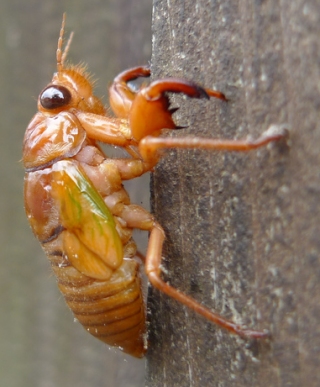
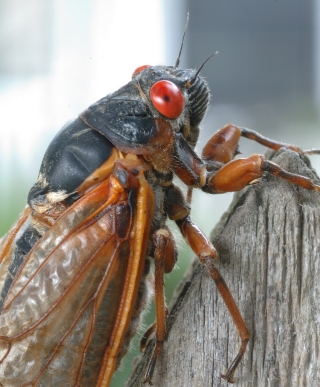
In the real world, Cicadas are Hemiptera ("true bugs") which begin their lives deep underground
as "nymphs," feeding on tree roots and rarely moving for up to 17 years in some species.
When the time comes to mature and reproduce, the crablike creatures burrow up from the
ground in droves, climb the trunk of their tree and molt into beautiful winged adults, leaving
behind their old, hollow skin almost perfectly intact - except for the hole in its back. More
commonly heard than seen, adult cicadas produce one of the loudest mating calls in nature,
and can be heard chattering throughout the summer months in most parts of the world.
players with its strange system of evolution; once the ground-dwelling Nincada transforms into
winged Ninjask, it may leave behind a second new pokemon called a "Shedinja". Part "bug type"
and part "ghost type", the Shedinja is a strange, hovering exoskeleton with a frail body but
unique defensive abilities.
In the real world, Cicadas are Hemiptera ("true bugs") which begin their lives deep underground
as "nymphs," feeding on tree roots and rarely moving for up to 17 years in some species.
When the time comes to mature and reproduce, the crablike creatures burrow up from the
ground in droves, climb the trunk of their tree and molt into beautiful winged adults, leaving
behind their old, hollow skin almost perfectly intact - except for the hole in its back. More
commonly heard than seen, adult cicadas produce one of the loudest mating calls in nature,
and can be heard chattering throughout the summer months in most parts of the world.
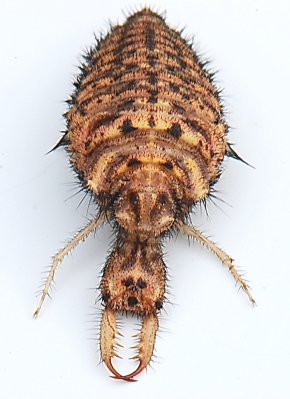
Another tricky one for some, it's easy to assume that Flygon is a "dragonfly" Pokémon, given
its appearance and "dragon" classification, but Trapinch and its evolutions owe their design
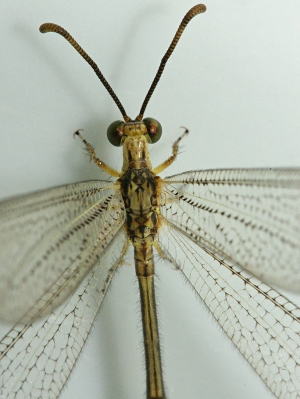
to a seldom-seen predator known in the west as an Antlion or Doodlebug. The short-lived
adult stage of this insect does indeed resemble a dragonfly, but the larval stage is what
these creatures are famous for; a voracious little monster which digs a steep, conical
pit-trap in sand or loose soil and buries itself at the bottom, waiting patiently for tiny insects to
slip and tumble straight into its venomous jaws.
its appearance and "dragon" classification, but Trapinch and its evolutions owe their design
to a seldom-seen predator known in the west as an Antlion or Doodlebug. The short-lived
adult stage of this insect does indeed resemble a dragonfly, but the larval stage is what
these creatures are famous for; a voracious little monster which digs a steep, conical
pit-trap in sand or loose soil and buries itself at the bottom, waiting patiently for tiny insects to
slip and tumble straight into its venomous jaws.
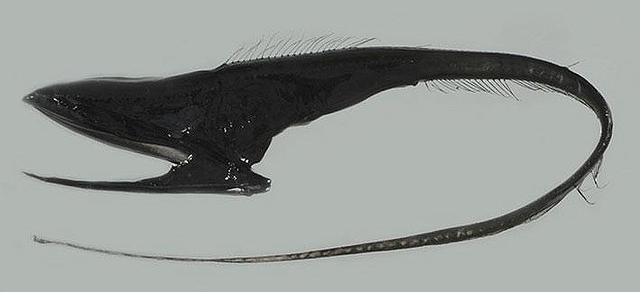
Also called Pelican eels, these eerie abyssal fish can be found at depths of 3000 to 26,000 feet
below the sea's surface, and can grow up to two feet long from head to tail. Aptly named, gulpers
can unhinge their already massive jaws and expand their stomachs to accommodate prey
seemingly many times their size. Like several other deep-sea fish, gulpers often attract prey with
a bioluminescent "lure," in this case a small bulb on the tip of their tail. Hanging motionless in the
water column, a gulper wiggles its own tail just inside its gaping maw.
below the sea's surface, and can grow up to two feet long from head to tail. Aptly named, gulpers
can unhinge their already massive jaws and expand their stomachs to accommodate prey
seemingly many times their size. Like several other deep-sea fish, gulpers often attract prey with
a bioluminescent "lure," in this case a small bulb on the tip of their tail. Hanging motionless in the
water column, a gulper wiggles its own tail just inside its gaping maw.
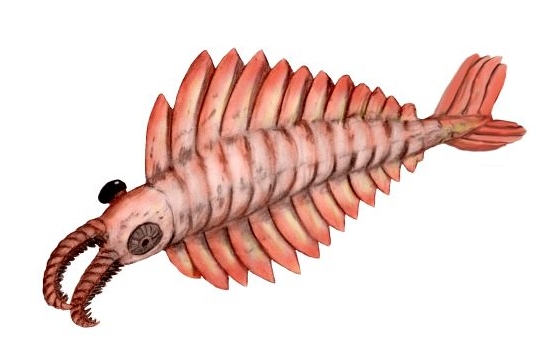
At a whopping two to three feet long, Anomalocaris reigned supreme as the world's largest
known predator millions of years before the evolution of most land animals or even animals with
vertebrae. Now thought to be a lobopod (like the terrestrial, still-living peripatus or "velvet-worm"),
this miniature monster terrorized the seas for almost 40 million years, preying upon small
trilobites snatched up in its spiny "feelers". These feelers, interestingly, were the first piece of the
animal ever discovered, and were thought to be the tails of some unknown shrimp-like animal.
Later, the circular mouth would be discovered and misidentified as a "toothed jellyfish", while an
imprint of the body was taken for some sort of plant or sea-pen. "Anomalous" indeed!
known predator millions of years before the evolution of most land animals or even animals with
vertebrae. Now thought to be a lobopod (like the terrestrial, still-living peripatus or "velvet-worm"),
this miniature monster terrorized the seas for almost 40 million years, preying upon small
trilobites snatched up in its spiny "feelers". These feelers, interestingly, were the first piece of the
animal ever discovered, and were thought to be the tails of some unknown shrimp-like animal.
Later, the circular mouth would be discovered and misidentified as a "toothed jellyfish", while an
imprint of the body was taken for some sort of plant or sea-pen. "Anomalous" indeed!
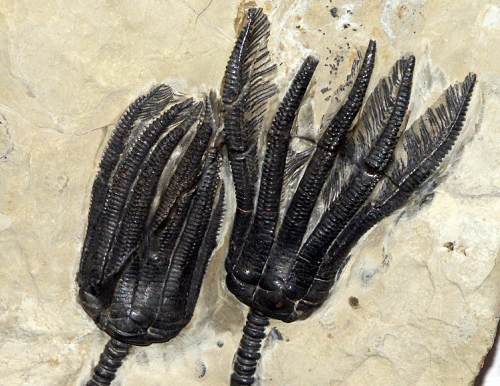
Lileep and Cradily are a rather strange pair; bearing the "grass" type implies that they are plants,
whereas the Pokédex refers to them as "anemones", a kind of animal in the order Cnidaria. Their
conceptual model, however, is an entirely different marine animal sometimes called a "sea lily".
Related to starfish and sea urchins, crinoids are echinoderms that feed primarily on plankton
ensnared by their feathery tentacles. Usually rooted in place by a long, thin stalk, many crinoids are
nonetheless quite mobile when the need arises, and some species have even been observed
"walking" on two tentacles in a weirdly anthropomorphic fashion. While modern species stick to a
feathery, flower-like anatomy, prehistoric crinoids came in wildly varied forms, some of them
resembling chunky, armored lumps, crawling discs or spiny cones.
whereas the Pokédex refers to them as "anemones", a kind of animal in the order Cnidaria. Their
conceptual model, however, is an entirely different marine animal sometimes called a "sea lily".
Related to starfish and sea urchins, crinoids are echinoderms that feed primarily on plankton
ensnared by their feathery tentacles. Usually rooted in place by a long, thin stalk, many crinoids are
nonetheless quite mobile when the need arises, and some species have even been observed
"walking" on two tentacles in a weirdly anthropomorphic fashion. While modern species stick to a
feathery, flower-like anatomy, prehistoric crinoids came in wildly varied forms, some of them
resembling chunky, armored lumps, crawling discs or spiny cones.
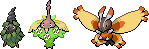
Unlike many other caterpillars, bagworms construct a cocoon almost as soon as they hatch,
protecting themselves throughout their larval stage with a thick casing made from twigs, leaves, or
in at least one species, decaying corpses. In many species, only the males metamorphose into
winged moths; mature females are typically limbless, faceless, worm-like reproductive machines
who remain in their bags until they mate and die, leaving behind a batch of eggs. While the bags of
most species have a tapering, pinecone-like shape, some build cases that resemble coiled snail
shells, or flattened discs with multiple openings.
Pineco and Forretress were the first bagworm-themed Pokémon, appearing in the "second
generation" games (Gold & Silver) and lacking a moth-like stage, perhaps implying a bagworm
species that evolved away from metamorphosis entirely. Later, a new bagworm, Burmy, would be
released with both worm-like female and winged male evolutions.
protecting themselves throughout their larval stage with a thick casing made from twigs, leaves, or
in at least one species, decaying corpses. In many species, only the males metamorphose into
winged moths; mature females are typically limbless, faceless, worm-like reproductive machines
who remain in their bags until they mate and die, leaving behind a batch of eggs. While the bags of
most species have a tapering, pinecone-like shape, some build cases that resemble coiled snail
shells, or flattened discs with multiple openings.
Pineco and Forretress were the first bagworm-themed Pokémon, appearing in the "second
generation" games (Gold & Silver) and lacking a moth-like stage, perhaps implying a bagworm
species that evolved away from metamorphosis entirely. Later, a new bagworm, Burmy, would be
released with both worm-like female and winged male evolutions.
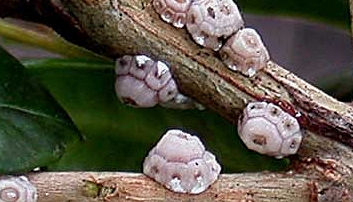
It is somewhat possible that Shuckle is some sort of terrestrial barnacle, but also possible that
this unique bug/rock pokemon was inspired in part by these common but seldom-noticed plant
parasites. Attached to their host by a thick shell of their own waxy secretions, adult scale insects
have soft, flat bodies with useless vestigial legs. Like aphids, their bodily waste is a sweet, sugary
"honeydew" that oozes from their casing (compare to Shuckle's "potion" filled shell) and is favored
by certain species of ant who in turn protect the scales from predators. Young scales, fully
mobile, are called "crawlers".
this unique bug/rock pokemon was inspired in part by these common but seldom-noticed plant
parasites. Attached to their host by a thick shell of their own waxy secretions, adult scale insects
have soft, flat bodies with useless vestigial legs. Like aphids, their bodily waste is a sweet, sugary
"honeydew" that oozes from their casing (compare to Shuckle's "potion" filled shell) and is favored
by certain species of ant who in turn protect the scales from predators. Young scales, fully
mobile, are called "crawlers".
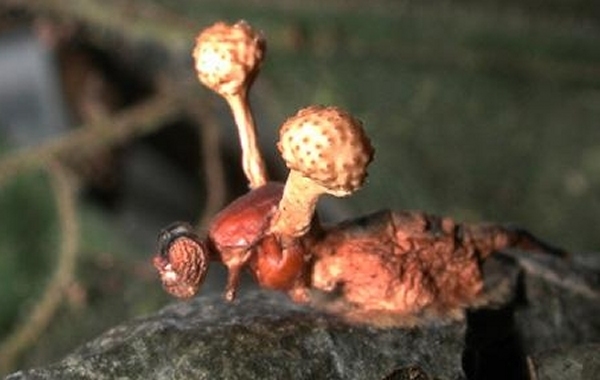
Complain all you like about Athlete's foot, but it has always been insects who suffer the full
brunt of fungal assault; Cordyceps is a genus of fungi exclusively parasitic in the bodies of
insects, sometimes even capable of manipulating host behavior. Many species will compel their
hosts to climb as high as possible and die where they stand, allowing the tiny mushrooms to
sprout and scatter airborne spores. Here, we see the corpse of a tiny fly bearing the twin
mushrooms that destroyed it.
Like Nincada, the insect half of Paras is modeled after a cicada in its immature "nymph" stage,
but finds itself completely overtaken by fungus before it can acquire wings. Several species of
Cordyceps are known to attack cicadas, and do indeed kill their hosts before they reach the
adult stage.
brunt of fungal assault; Cordyceps is a genus of fungi exclusively parasitic in the bodies of
insects, sometimes even capable of manipulating host behavior. Many species will compel their
hosts to climb as high as possible and die where they stand, allowing the tiny mushrooms to
sprout and scatter airborne spores. Here, we see the corpse of a tiny fly bearing the twin
mushrooms that destroyed it.
Like Nincada, the insect half of Paras is modeled after a cicada in its immature "nymph" stage,
but finds itself completely overtaken by fungus before it can acquire wings. Several species of
Cordyceps are known to attack cicadas, and do indeed kill their hosts before they reach the
adult stage.
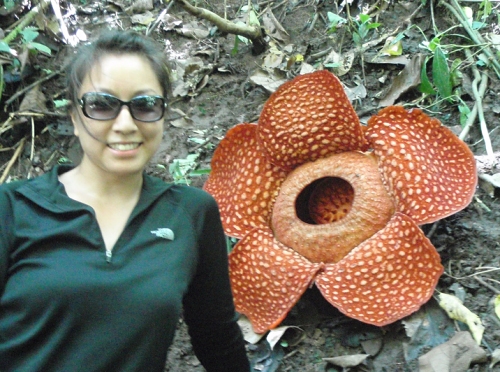
The largest single flower in the world, the giant rafflesia can reach up to three feet across and is
among the rarest tropical plants known to man. Without leaves, roots or even a stem, the
disembodied blossom grows only as a parasite on the vines of another plant, Tetrastigma. They are
sometimes called the "corpse flower", as they favor flies for pollination and mimic both the texture
and smell of decaying flesh. Amazingly, every massive blossom produces only one tiny seed, which
sticks to the fur of small mammals in the vague hope of finding another host.
Seldom referenced in American culture, Rafflesia are a relatively popular icon in Japan and have
found their way into much more than just Pokémon, with many other video game appearances
(including Animal Crossing: Wild World) and a handful of rubber-suit television monsters to their
name.
among the rarest tropical plants known to man. Without leaves, roots or even a stem, the
disembodied blossom grows only as a parasite on the vines of another plant, Tetrastigma. They are
sometimes called the "corpse flower", as they favor flies for pollination and mimic both the texture
and smell of decaying flesh. Amazingly, every massive blossom produces only one tiny seed, which
sticks to the fur of small mammals in the vague hope of finding another host.
Seldom referenced in American culture, Rafflesia are a relatively popular icon in Japan and have
found their way into much more than just Pokémon, with many other video game appearances
(including Animal Crossing: Wild World) and a handful of rubber-suit television monsters to their
name.
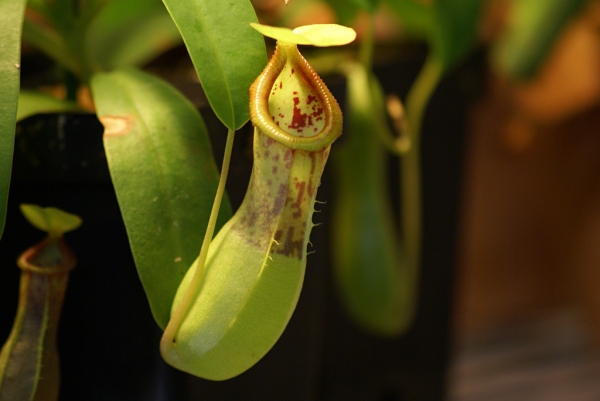
Constantly overshadowed by the world's lone species of Venus Fly-Trap, there are actually many
plants that prey upon small animals, and the various "pitcher" traps come in the greatest variety.
They generally attract prey with their coloration and scent, though some species secrete an
intoxicating nectar to seal the deal. Insects landing on their slippery lips soon find themselves
drowning in the trap's water-filled innards, attacked by digestive enzymes even as they struggle.
Oily, downward pointing hairs make climbing out an impossible task, and some species even have
transparent windows to disguise the true exit.
As crafty as these plants are on their own, it's not unheard of for certain spiders to take up
residence in a pitcher and stretch their web across the opening. Combined, they trap more prey
than they ever would alone, and the spider instinctively drops nutritious leftovers into the pool below.
plants that prey upon small animals, and the various "pitcher" traps come in the greatest variety.
They generally attract prey with their coloration and scent, though some species secrete an
intoxicating nectar to seal the deal. Insects landing on their slippery lips soon find themselves
drowning in the trap's water-filled innards, attacked by digestive enzymes even as they struggle.
Oily, downward pointing hairs make climbing out an impossible task, and some species even have
transparent windows to disguise the true exit.
As crafty as these plants are on their own, it's not unheard of for certain spiders to take up
residence in a pitcher and stretch their web across the opening. Combined, they trap more prey
than they ever would alone, and the spider instinctively drops nutritious leftovers into the pool below.
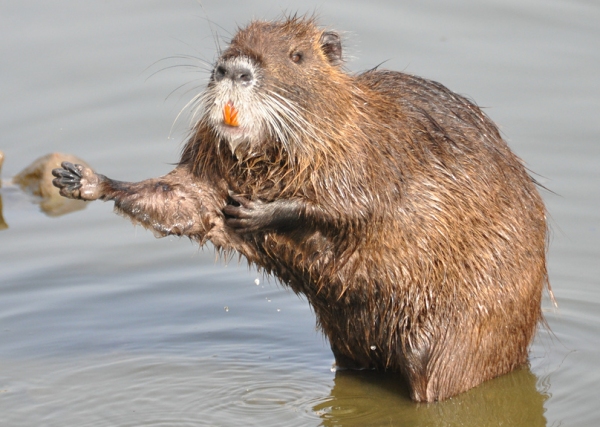
You might think that Raticate is just, well, a rat, but there are many different rodents who carry the
"rat" moniker, and it's the Nutria or "coypu" that Raticate appears to be modeled after. Besides the
overall physical resemblance, Nutria are "water rats" with webbed hind feet, a trait shared by
Raticate according to its official data. Raised in captivity for cheap meat and cheaper fur, escaped
Nutria have become an ecological pest throughout the world, where the beaver-sized rodents
devour local plant and animal life alike. Strangely, the female's teats are situated high up her sides,
allowing her young to nurse even while she swims.
"rat" moniker, and it's the Nutria or "coypu" that Raticate appears to be modeled after. Besides the
overall physical resemblance, Nutria are "water rats" with webbed hind feet, a trait shared by
Raticate according to its official data. Raised in captivity for cheap meat and cheaper fur, escaped
Nutria have become an ecological pest throughout the world, where the beaver-sized rodents
devour local plant and animal life alike. Strangely, the female's teats are situated high up her sides,
allowing her young to nurse even while she swims.
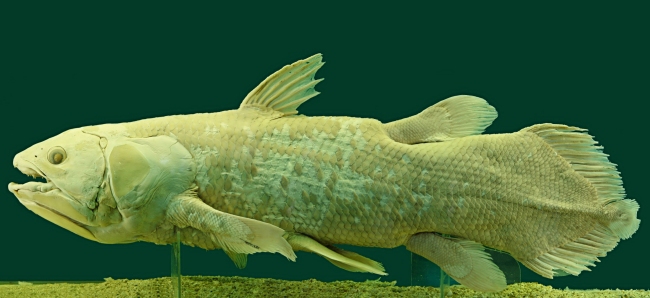
Off the coast of Africa in 1938, zoological history was made with the discovery of a living species
previously thought extinct for over 360 million years. Over a hundred species of coelecanth are
known from fossil remains, but only two are known to survive today, and remain a rare and
celebrated sighting. These nine-finned fish are the only living animal with an intracranial joint - a
division allowing the front of their head to bend upwards as they feed - and give birth to live young.
They feed on any smaller creature they can get ahold of, and reach up to six feet in length.
previously thought extinct for over 360 million years. Over a hundred species of coelecanth are
known from fossil remains, but only two are known to survive today, and remain a rare and
celebrated sighting. These nine-finned fish are the only living animal with an intracranial joint - a
division allowing the front of their head to bend upwards as they feed - and give birth to live young.
They feed on any smaller creature they can get ahold of, and reach up to six feet in length.
Many eager young fans like to pretend that these pokemon are "Raptors", but the truth is far more
interesting than a theropod that barely exists; the proper term, you see, is Deinonychusaur, and
the popular "Jurassic park" version is inaccurate anyway.
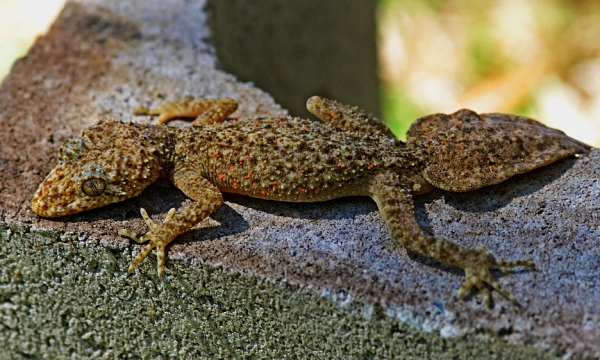
Leaf-tailed geckos, like all other geckos, are large-eyed nocturnal insectivores able to climb any
surface in any direction with equal ease, thanks to branching filaments on their toes able to grip
surfaces on a molecular level. Unlike other geckos, leaf-tail varieties are equipped with
expandable frills and membranes allowing them to leap and glide short distances, not unlike the
famous "flying squirrel."
interesting than a theropod that barely exists; the proper term, you see, is Deinonychusaur, and
the popular "Jurassic park" version is inaccurate anyway.
Leaf-tailed geckos, like all other geckos, are large-eyed nocturnal insectivores able to climb any
surface in any direction with equal ease, thanks to branching filaments on their toes able to grip
surfaces on a molecular level. Unlike other geckos, leaf-tail varieties are equipped with
expandable frills and membranes allowing them to leap and glide short distances, not unlike the
famous "flying squirrel."
Alright, look: I know you've all comfortably thought of these two Pokémon as "ducks" since the
dawn of the 21st century, but you're just going to have to wake up and accept the fact that having
"duck" in their names doesn't mean a damn thing. During the video game's earliest prototype
phases, "flying" type was known as "bird" type, and assigned to every bird-based Pokémon
whether or not they could actually fly (see: Doduo and Dodrio). Psyduck and Golduck, however, did
not receive the "bird" or "flying" type because they are not birds. With four webbed limbs, a full
covering of fur, mammalian tails and a habit of swimming beneath the water, these guys always
have been and always will be duck-billed platypses and there's not a damn thing you can do about
it. You might try to say that they're just stylized, duck-like monsters, but that would still make them
stylized, duck-like monsters identical to platypuses. You must see the futility in arguing with me.
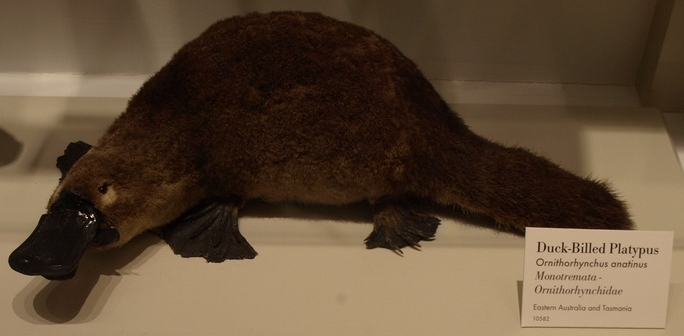
Platypuses are egg-laying mammals or "monotremes," an ancient group survived only by these
animals and the echidnas or "spiny anteaters." Their duck-like bills are sensitive to the electrical
fields of their prey, and males are armed with a highly venomous spur on each hind foot.
Yes, I'm also aware that Golduck is intentionally similar to the (typically more reptilian) Kappa of
Japanese folklore, but this is an article about the natural world, not the supernatural, and Golduck
clearly has a primary animal basis.
dawn of the 21st century, but you're just going to have to wake up and accept the fact that having
"duck" in their names doesn't mean a damn thing. During the video game's earliest prototype
phases, "flying" type was known as "bird" type, and assigned to every bird-based Pokémon
whether or not they could actually fly (see: Doduo and Dodrio). Psyduck and Golduck, however, did
not receive the "bird" or "flying" type because they are not birds. With four webbed limbs, a full
covering of fur, mammalian tails and a habit of swimming beneath the water, these guys always
have been and always will be duck-billed platypses and there's not a damn thing you can do about
it. You might try to say that they're just stylized, duck-like monsters, but that would still make them
stylized, duck-like monsters identical to platypuses. You must see the futility in arguing with me.
Platypuses are egg-laying mammals or "monotremes," an ancient group survived only by these
animals and the echidnas or "spiny anteaters." Their duck-like bills are sensitive to the electrical
fields of their prey, and males are armed with a highly venomous spur on each hind foot.
Yes, I'm also aware that Golduck is intentionally similar to the (typically more reptilian) Kappa of
Japanese folklore, but this is an article about the natural world, not the supernatural, and Golduck
clearly has a primary animal basis.
| Mudkip family - Mudskippers |
| Nincada, Ninjask & Shedinja - Cicadas |
| Trapinch, Vibrava and Flygon - Antlions |
| Huntail - Deep sea Gulper Eel |
| Anorith and Armaldo - Anomalocaris |
| Lileep and Cradily - Crinoids or "Sea lilies" |
| Shuckle - Scale Insects? |
| Paras & Parasect - Cicadas & parasitic fungi |
| Vileplume - Rafflesia Arnoldi |
| Victreebel - Nepenthes |
| Raticate - the Nutria |
| Relicanth - Coelacanth |
| Sceptile family - Leaf-tailed Geckos |
| Psyduck & Golduck - PLATYPUSES! |


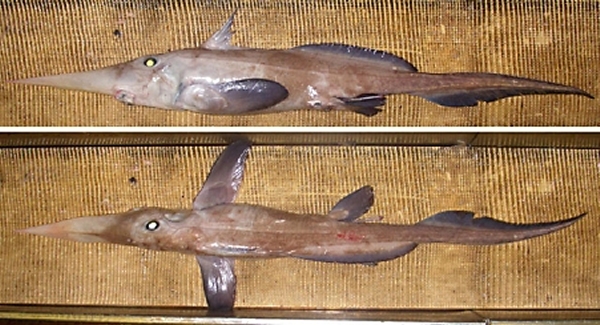
Poor, misunderstood Gorebyss. Fans have debated whether this needle-nosed "eel" is a pipefish,
a hagfish, a snipe eel or even a dolphin, of all things - wishful thinking by Delphinidae fans. Evolving
from Clamperl (a mollusk!) with the "deep sea scale" item, there should be no mistaking this
abyssal fish for a lousy porpoise - it's even sister to fellow deepwater creep Huntail (above) which
evolves from Clamperl using the "deep sea tooth!"
The long-nosed chimaera doesn't actually feed through its snout like Gorebyss, but it does use the
electroreceptors on its snout to locate its prey, usually hard-shelled creatures such as
crustaceans and (ironically) clams. Related to sharks and rays, these cartilaginous fish were
much more common and diverse millions of years in the past, now restricted mostly to deep, cold
waters. Though unlikely to encounter humans, the spine on a chimaera's back fin is highly
venomous.
a hagfish, a snipe eel or even a dolphin, of all things - wishful thinking by Delphinidae fans. Evolving
from Clamperl (a mollusk!) with the "deep sea scale" item, there should be no mistaking this
abyssal fish for a lousy porpoise - it's even sister to fellow deepwater creep Huntail (above) which
evolves from Clamperl using the "deep sea tooth!"
The long-nosed chimaera doesn't actually feed through its snout like Gorebyss, but it does use the
electroreceptors on its snout to locate its prey, usually hard-shelled creatures such as
crustaceans and (ironically) clams. Related to sharks and rays, these cartilaginous fish were
much more common and diverse millions of years in the past, now restricted mostly to deep, cold
waters. Though unlikely to encounter humans, the spine on a chimaera's back fin is highly
venomous.
| Gorebyss - Long-nosed Chimaera |

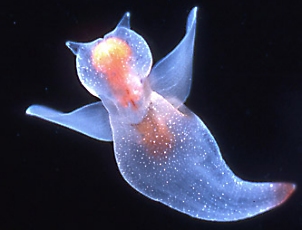
The legendary water type "Manaphy" of "Pokemon: Diamond and Pearl" can be bred to produce
the less-legendary Fione, populating the pokeseas with its malformed offspring. Cute, but not quite
as cute as the real-world Clione. These tiny, shell-less sea snails, with their darling little "wings",
are yet another oddball animal idolized by the Japanese, who call it "Naked Turtle Shell" or "Angel
of the Ice". They are, as you may have guessed, cold-water animals, and follow broken ice floes
out to sea as spring approaches. They mate side by side, each embracing the other with one wing
while swimming in unison.
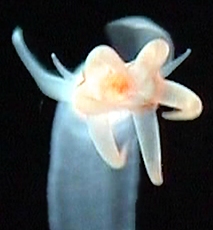
Unlike their pocket monster counterparts, these precious sea-pixies are actually rather brutal
predators, and feed almost exclusively on another, shell-bearing species of swimming snail. With
a ring of expandable tentacles concealed within its saclike head, the Clione ensnares its preferred
quarry and utilizes "hook sacs" to tear the entire catch out of its shell, which the little sea-angel
tosses aside as it engulfs the prey alive and bores into it with a tooth-lined tongue.
the less-legendary Fione, populating the pokeseas with its malformed offspring. Cute, but not quite
as cute as the real-world Clione. These tiny, shell-less sea snails, with their darling little "wings",
are yet another oddball animal idolized by the Japanese, who call it "Naked Turtle Shell" or "Angel
of the Ice". They are, as you may have guessed, cold-water animals, and follow broken ice floes
out to sea as spring approaches. They mate side by side, each embracing the other with one wing
while swimming in unison.
Unlike their pocket monster counterparts, these precious sea-pixies are actually rather brutal
predators, and feed almost exclusively on another, shell-bearing species of swimming snail. With
a ring of expandable tentacles concealed within its saclike head, the Clione ensnares its preferred
quarry and utilizes "hook sacs" to tear the entire catch out of its shell, which the little sea-angel
tosses aside as it engulfs the prey alive and bores into it with a tooth-lined tongue.
| Phione & Manaphy - Clione or "Sea Butterflies" |

| The Pineco family (left) and the Burmy family (right) - Bagworm Moths |


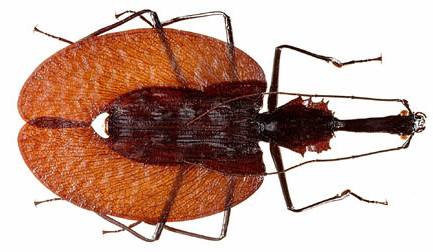
Though referred to as a "cricket" Pokemon, the musical Kricketune is actually based on a type of
carnivorous Carabid beetle, Mormolyce phylloides. Commonly called a violin beetle, fiddle beetle or
Malayan leaf beetle. These beetles have been the basis for several other Japanese monsters, and
the swept or sickle-shaped antenna are seen as a major distinguishing characteristic.
Unlike crickets or Kricketune, the violin beetle cannot produce sound. Its flattened body is highly
effective for a life amidst tree bark, leaf litter or loose soil, and its elongated head can draw smaller
insect prey out of tunnels and crevasses. When threatened, this beetle ejects butyric acid from
glands within its abdomen, capable of paralyzing human fingers for over a day.
carnivorous Carabid beetle, Mormolyce phylloides. Commonly called a violin beetle, fiddle beetle or
Malayan leaf beetle. These beetles have been the basis for several other Japanese monsters, and
the swept or sickle-shaped antenna are seen as a major distinguishing characteristic.
Unlike crickets or Kricketune, the violin beetle cannot produce sound. Its flattened body is highly
effective for a life amidst tree bark, leaf litter or loose soil, and its elongated head can draw smaller
insect prey out of tunnels and crevasses. When threatened, this beetle ejects butyric acid from
glands within its abdomen, capable of paralyzing human fingers for over a day.
| Kricketune - The Violin Beetle |



| Get out of there, It knows Petal Dance! (SOURCE) |
| Karrablast & Escavalier - Carabids |


Karrablast is the only pocket monster to evolve when traded to another player for a different pocket
monster, the snail-like Shelmet. This prompts Karrablast to transform into Escavalier, a knight-like
bug/steel creature, while Shelmet loses its shell and becomes the ninja-like slug, Accelgor. This
peculiar setup was almost certainly inspired by certain species of carabid or "ground beetle," such
as this Scaphinotus species, which uses its specially shaped body to reach into snail shells and
devour their owners.
monster, the snail-like Shelmet. This prompts Karrablast to transform into Escavalier, a knight-like
bug/steel creature, while Shelmet loses its shell and becomes the ninja-like slug, Accelgor. This
peculiar setup was almost certainly inspired by certain species of carabid or "ground beetle," such
as this Scaphinotus species, which uses its specially shaped body to reach into snail shells and
devour their owners.
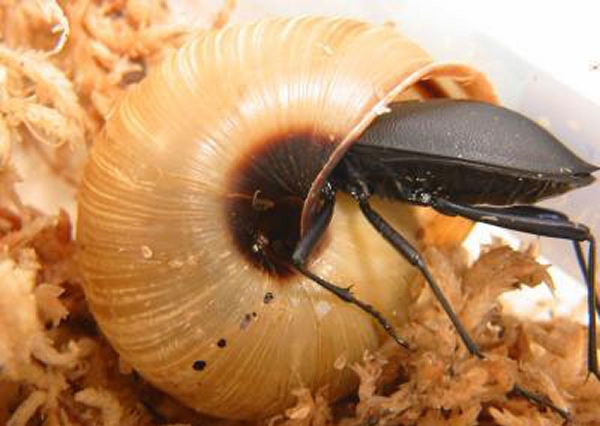
| Photo by J. Konuma |
| Leavanny - Phylliidae |

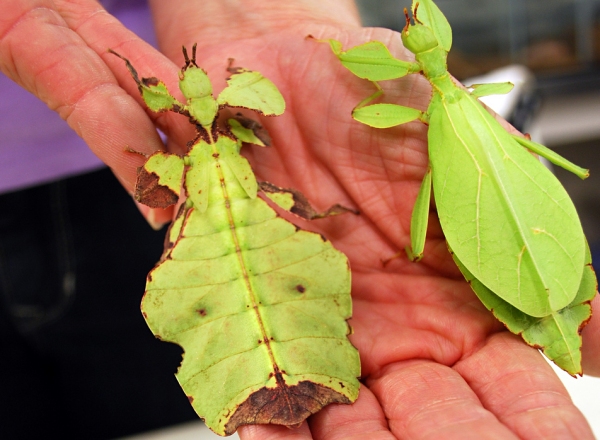
Phyllids are members of the Phasmidae, most of which imitate plant stalks or twigs and are
popularly known as "walkingsticks." These tropical phasmids bear a somewhat more elaborate
disguise, with almost every part of their body resembling a leaf including "wilted" or "damaged"
looking areas for added authenticity. Even their eggs are camouflaged as seeds, though unlike
Leavanny - which evolves from a caterpillar-like creature - young Phyllids are "nymphs" resembling
tiny, wingless adults.
popularly known as "walkingsticks." These tropical phasmids bear a somewhat more elaborate
disguise, with almost every part of their body resembling a leaf including "wilted" or "damaged"
looking areas for added authenticity. Even their eggs are camouflaged as seeds, though unlike
Leavanny - which evolves from a caterpillar-like creature - young Phyllids are "nymphs" resembling
tiny, wingless adults.
| Tynamo Family - Lampreys |
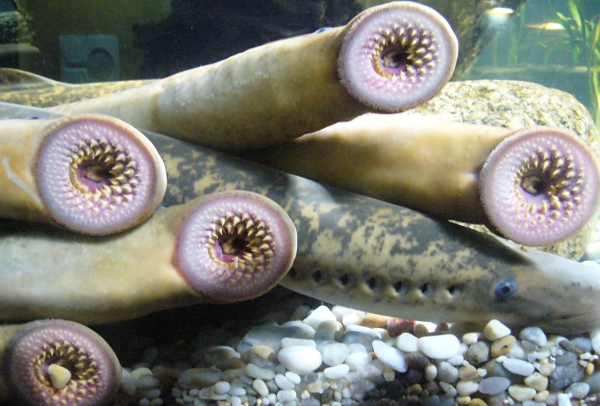


One of my personal favorite animals, lampreys along with slime hags are the only surviving
members of the ancient agnathans, or "jawless fish." While many lampreys are harmless filter
feeders, the most famous are voracious blood-sucking parasites, using their sucker-like lips and
dozens of wicked teeth to gnaw holes in other fish, only attacking warm-blooded creatures when
desperate. Sea lampreys have become serious pests in the great lakes, where they impact
indigenous fish populations.
Jawless "fish" are entirely distinct from the other animals we like to call "fish," not only lacking jaws
but possessing only rudimentary cartilaginous skeletons and circular pores for gills. Lampreys are
not to be confused with eels, a distinct group of true bony fish.
members of the ancient agnathans, or "jawless fish." While many lampreys are harmless filter
feeders, the most famous are voracious blood-sucking parasites, using their sucker-like lips and
dozens of wicked teeth to gnaw holes in other fish, only attacking warm-blooded creatures when
desperate. Sea lampreys have become serious pests in the great lakes, where they impact
indigenous fish populations.
Jawless "fish" are entirely distinct from the other animals we like to call "fish," not only lacking jaws
but possessing only rudimentary cartilaginous skeletons and circular pores for gills. Lampreys are
not to be confused with eels, a distinct group of true bony fish.
| Stunfisk - Flatfish |

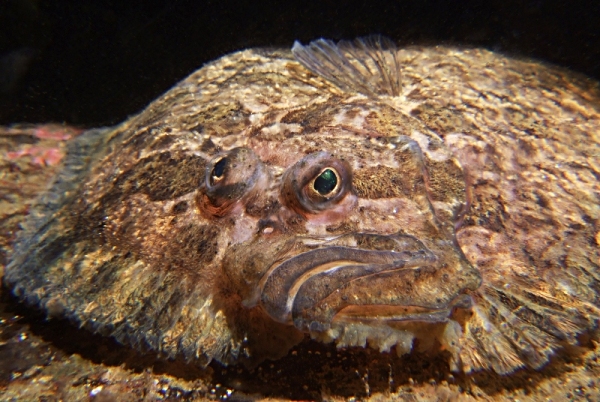
Pleuronectiformes or "flatfish" include the flounders, soles, halibut and turbot. All are carnivorous,
mostly marine animals notable for their incredibly unique, asymmetrical adult anatomy. Newly
hatched young resemble conventional fish fry, but as a flatfish matures, one of its eyes will slowly
creep around its skull until both are on the same side of its head. This gives the flatfish a clear view
of its surroundings as it lies on its side, flat against the surrounding sand or mud as it hunts for
small prey. Many species are able to change their skin color to almost any pattern they desire,
blending in against the terrain. They can be found from shallow beaches to the deepest depths of
any known fish.
As an electric-type monster, Stunfisk has also been likened to a torpedo ray or fellow
bottom-dwelling shocker, the stargazer.
mostly marine animals notable for their incredibly unique, asymmetrical adult anatomy. Newly
hatched young resemble conventional fish fry, but as a flatfish matures, one of its eyes will slowly
creep around its skull until both are on the same side of its head. This gives the flatfish a clear view
of its surroundings as it lies on its side, flat against the surrounding sand or mud as it hunts for
small prey. Many species are able to change their skin color to almost any pattern they desire,
blending in against the terrain. They can be found from shallow beaches to the deepest depths of
any known fish.
As an electric-type monster, Stunfisk has also been likened to a torpedo ray or fellow
bottom-dwelling shocker, the stargazer.
| Snivy Family - Vine Snakes |


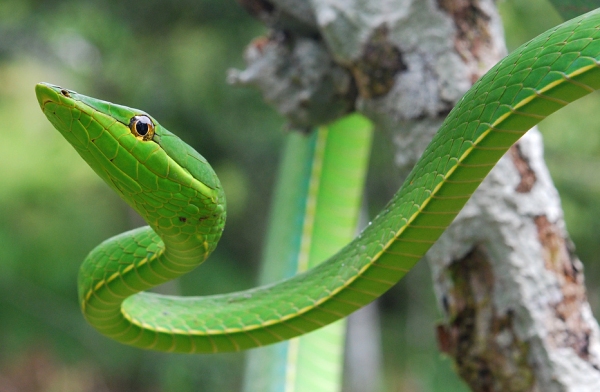
While all snakes are essentially camouflaged as vines by default, several genera more deliberately
imitate plant life and are all known as "vine snakes," including the Ahaetulla, Chironius and
Oxybelis, shown here. Of these, members of Ahaetulla and Oxybelis are mildly venomous, while
Chironius simply bite and constrict prey.
imitate plant life and are all known as "vine snakes," including the Ahaetulla, Chironius and
Oxybelis, shown here. Of these, members of Ahaetulla and Oxybelis are mildly venomous, while
Chironius simply bite and constrict prey.
| Woobat and Swoobat - Honduran White Bats |


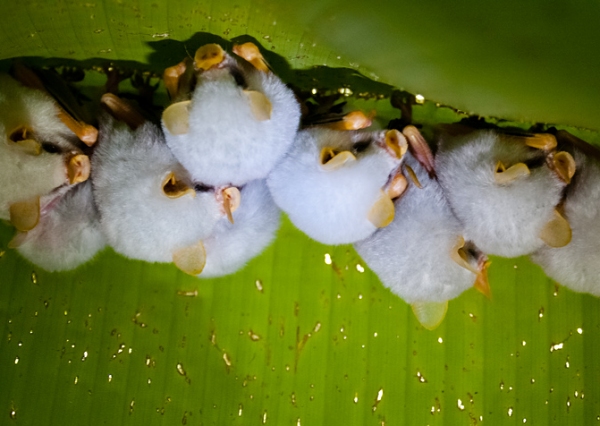
Ectophylla alba, also known as the "Honduran White Bat" or "D'AAAWWW!!! LOOK
AT THOSE! OH MY GOD!" is an extremely tiny tropical bat found in Honduras,
Nicaragua, Costa Rica and Panama. Forming small colonies with a single male and harem of
females, the bats bite the undersides of Heliconia leaves to fold them down into tents, and are
known to feed at least partially on fruit. Their pure white fur is actually a rather ingenious
camouflaging adaptation; as light passes through their leafy home, it casts the colorless fur in
green, an easy compensation for evolving actual green-tinted fur, which no mammal has achieved.
As a reader pointed out, this is even reflected by the ultra-rare "shiny" versions of these Pokemon:
AT THOSE! OH MY GOD!" is an extremely tiny tropical bat found in Honduras,
Nicaragua, Costa Rica and Panama. Forming small colonies with a single male and harem of
females, the bats bite the undersides of Heliconia leaves to fold them down into tents, and are
known to feed at least partially on fruit. Their pure white fur is actually a rather ingenious
camouflaging adaptation; as light passes through their leafy home, it casts the colorless fur in
green, an easy compensation for evolving actual green-tinted fur, which no mammal has achieved.
As a reader pointed out, this is even reflected by the ultra-rare "shiny" versions of these Pokemon:


| Alomomola - Mola Mola |

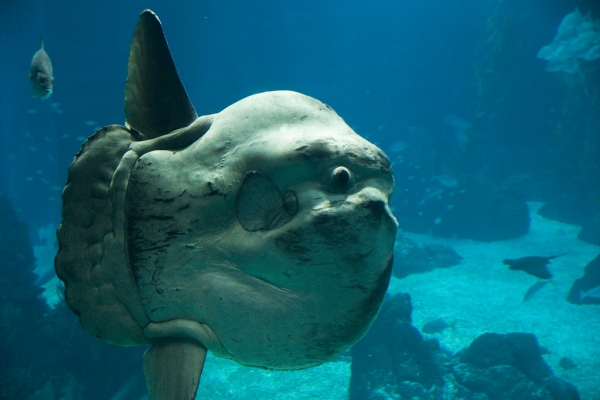
The Mola, ocean sunfish or "headfish" is the heaviest bony fish known to man, often exceeding a
ton as an adult. With few natural predators, these unearthly looking pufferfish relatives are slow
moving and quite gentle, subsisting primarily on a diet of jellyfish. Females are known to produce
more eggs than almost any other vertebrate, which hatch into spiny larvae barely larger than the
head of a pin. Though their growth rate in the wild is unknown, a young Mola at the Monterey Bay
Aquarium increased in size over fourteen times in only a year.
Oddly enough, Alomomola somewhat resembles an older, smaller Pokemon, Luvdisc, but does
not evolve from it. This may parallel Ranzania laevis, an unusually small Mola species only around
three feet in length.
ton as an adult. With few natural predators, these unearthly looking pufferfish relatives are slow
moving and quite gentle, subsisting primarily on a diet of jellyfish. Females are known to produce
more eggs than almost any other vertebrate, which hatch into spiny larvae barely larger than the
head of a pin. Though their growth rate in the wild is unknown, a young Mola at the Monterey Bay
Aquarium increased in size over fourteen times in only a year.
Oddly enough, Alomomola somewhat resembles an older, smaller Pokemon, Luvdisc, but does
not evolve from it. This may parallel Ranzania laevis, an unusually small Mola species only around

three feet in length.
| Written by Jonathan Wojcik - more bogleech freaky nature articles here! |