Written by Jonathan Wojcik
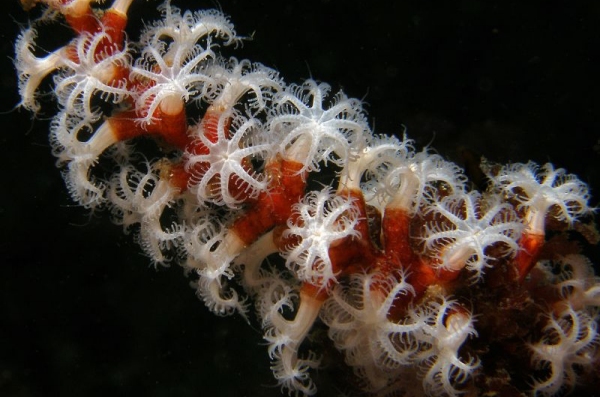
The Cnidaria (with a silent "C") are one of the star Phyla within the kingdom Animalia, alongside such
others as the Echinoderms, Mollusks, Arthropods and us Chordata. Their gelatinous bodies are
devoid of blood, brain tissue or respiratory organs, with only a single orifice leading to a single cavity,
but these simply jelly-bags have evolved one of nature's most sophisticated weapons, built entire undersea worlds from their
bodies, conquered every corner of the globe and even cheated death. Here we'll talk about the major groups of these slimy phantoms, then talk about some of the most bizarre and outrageous species!
The Scyphozoa, or "classic" Jellyfish
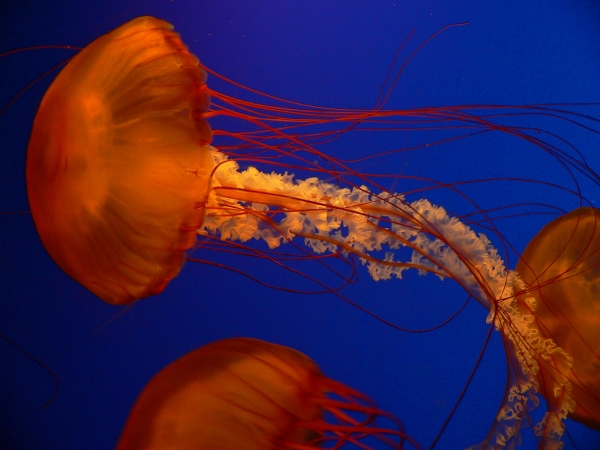
Jellyfish have always been tied with starfish as an almost symbolic inhabitant of the sea, and one of Earth's most
famous animals without any brains. What most of us think of as a jellyfish is usually a Scyphozoan, like the
globsters above, which belong to the class "Medusozoa." Like all Cnidaria, these creatures consist of only two cellular layers, an inner and outer wall separated by the gelatinous mesoglea. A repetitive, involuntary contraction of the main "bell"
(like a heartbeat) propels a Scyphozoan blindly through the water, often trailing tentacles behind it to trap food
like a hungry, self propelled cobweb. The thicker, ribbon-like appendages are the "oral arms" typically used
to grasp and hold prey, while the thinner, threadlike "fringe" tentacles are where many jellies pack row upon
row of tiny "cnidoblasts," a weapon completely unique to the cnidaria:
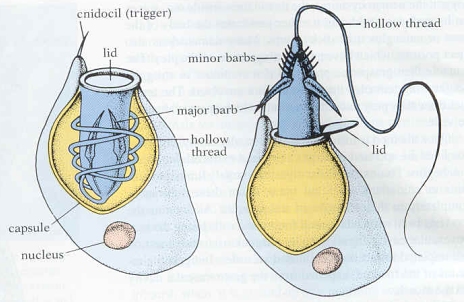
I've talked about these before when I discussed how other creatures, especially nudibranchs, can actually steal them for their
own use. Also called a cnidocyst or nematocyte, this vicious microscopic mechanism consists primarily of a hollow bulb
with an inverted tip. At the slightest brush of its hair-like trigger, the bulb floods with water to flip the
sharpened tip to an everted position, easily penetrating the skin of most other organisms. In the same
instant, a hollow cable is squirted into the wound to firmly anchor the sting while it injects debilitating venom. Some species may even inject digestive enzymes from the nematocyst, though most of the digestion process occurs within their single body cavity.
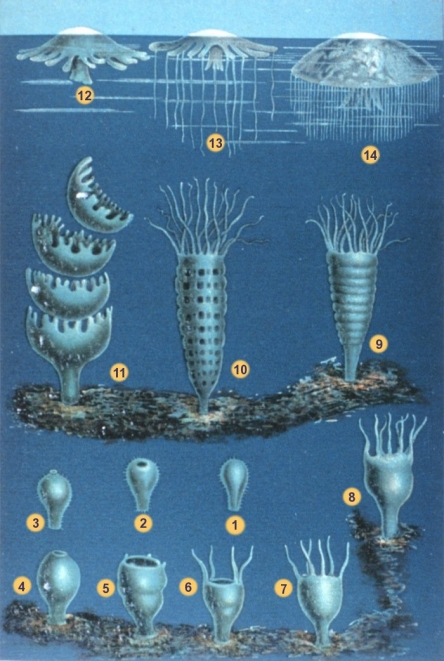
Many jellyfish have a life cycle consisting of both the swimming "medusa" form and a less famous, but equally important
"polyp" form, which lives anchored in place and continuously sprouts off new medusa. It is during the
swimming stage that Scyphozoans mate, producing larvae that settle into new polyps, or, in some species,
give birth directly to new medusae.
Cubozoa, or "box" Jellies
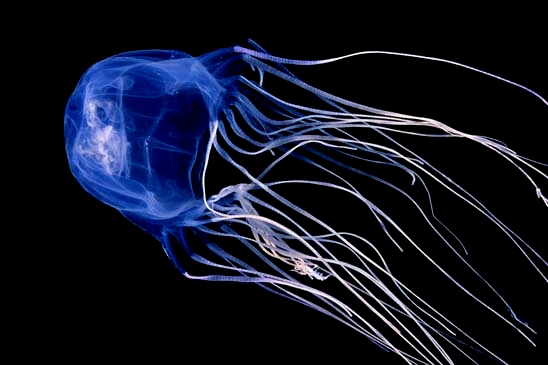
A slightly different group of Medusozoa, the Cubozoa are fundamentally similar to the Scyphozoa but
somewhat more sophisticated, with a sturdier "box" shaped bell capable of more rapid and directed
movement, a more advanced nervous system with more directional control, and in many species,
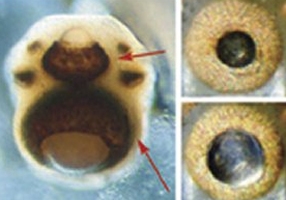
fully-functioning eyes. Not simple eye-spots or light sensors, but eyes with retinas, corneas and lenses,
clustered at the corners of the boxy body.
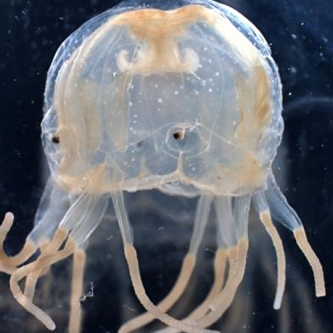
Cubozoa are most famous for the "sea wasps" and "Irukandji" jellyfish, notorious for some of the deadliest and
most agonizing stings in nature. Smarter, faster, less blind and more toxic, Cubozoa are pretty much just
Jellyfish 2.0.
The Hydrozoa
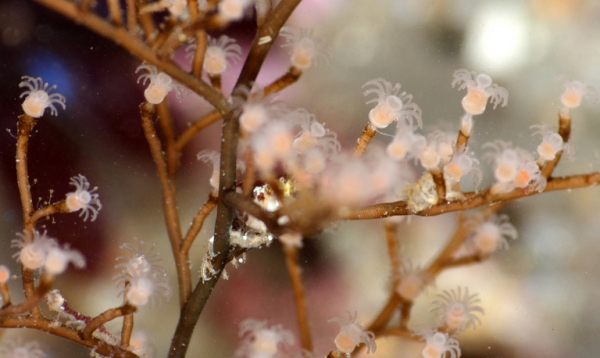
Another member of the Medusozoa are the Hydrozoa or "Hydroids." Like the jellyfish, many species have
both an anchored "polyp" stage and swimming "medusan," but it is often the polyp that can be considered
the "adult," and may grow into a massive, plant-like colony of identical animals connected by a network of
gelatinous tubes; a plankton-eating jellyfish-tree.
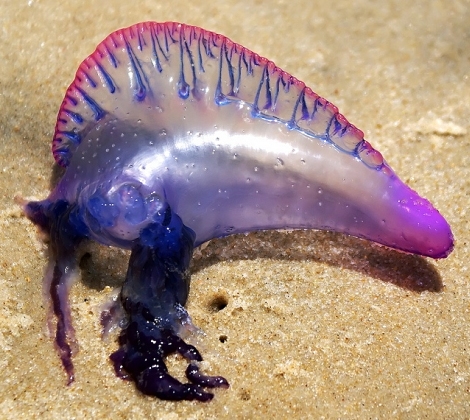
Much more complex are the Hydrozoans known as Siphonophores, which
work together more like organs in a body than whole animals in a colony.
Unable to survive independently, the polyps of a Siphonophore include
some members devoted entirely to feeding, some to reproduction and some
to locomotion. Physalia physalis, the "Portuguese Man O' War," is probably the most
famous siphonophore, though commonly mistaken for a mere jellyfish. It
has no swimming polyps, but hangs in the water from a gas-filled float with a
raised sail, living at the mercy of the wind and current. Its tentacles pack an
uncommonly painful, sometimes life-threatening sting, and can reach
between 30 and 200 feet in length.
Siphonophores get particularly spectacular in the deep-sea abyss, where they may employ bioluminescence
to protect themselves or attract their prey. Some species can grow upwards of ninety feet in length, rivaling
their fellow gelatinous serpents, the colonial tunicates.
The Anthozoa
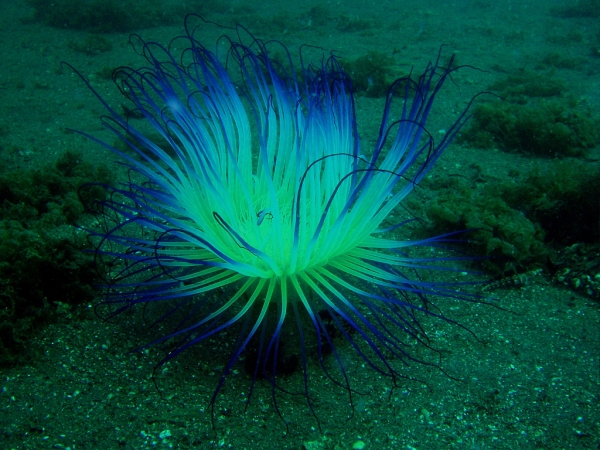
Sisters to the Medusozoa, the "minimal" Anthozoan is what we call a sea anemone, an animal usually attached to a solid surface by a
thick stem. The mouth is pointed outwards and surrounded by stinging tentacles capable of lassoing
relatively large fish and crustaceans, though some venom-resistant animals may take up residence in its
tentacles as a beneficial partner (clownfish) or a tissue-feeding parasite (certain shrimp). Though they
appear sedentary, they can be capable of slug-like crawling, rolling, or even awkward swimming.
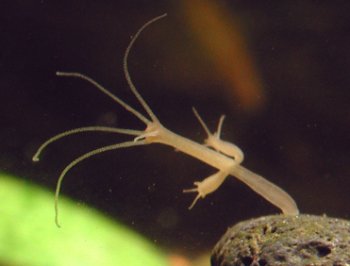
Similar to the anemones are members of the genus Hydra, the most common Cnidaria found in fresh water environments.
Often microscopic or very nearly so, these little guys prey on tiny shrimp, protozoa or newly hatched fish, and
are given a greenish tint by algae living within their bodies.
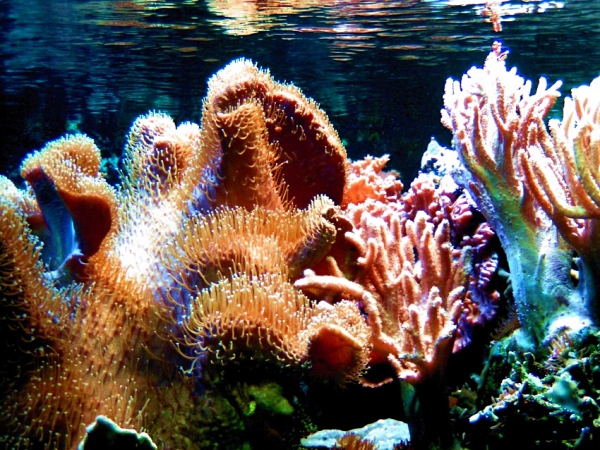
Easily the most important of all Cnidaria are the corals, in particular the "hard" or "stony" corals whose rocky
skeletons create entire ecosystems - coral reefs - home to thousands of unique animal species. A single
coral polyp is similar to an anemone, but in most cases, clones itself into dozens or hundreds of identical,
connected individuals - not unlike the Hydroids - who grow a calcerous "skeleton" around their bodies. Contracted into their skeleton,
the polyps are well protected and virtually unseen, but extend their tentacles or "bloom" regularly to collect
particles of food. Most corals reproduce by releasing large amounts of sperm and eggs into the surrounding
water, and in many cases an entire reef will spawn on the same night.
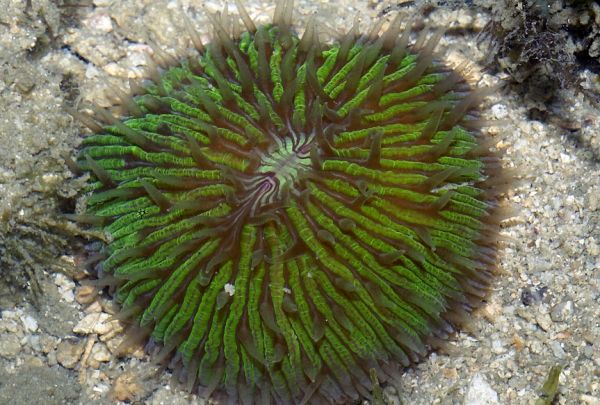
"Solitary" corals are not unheard of; this mushroom coral (Fungiidae) consists of a single large polyp with a
biscuit-shaped skeleton that simply lies unanchored on the sea floor and can even creep from place to place.
Long thought to feed on only tiny plankton, certain mushroom corals were recently observed slurping entire
large jellyfish into their central mouths.
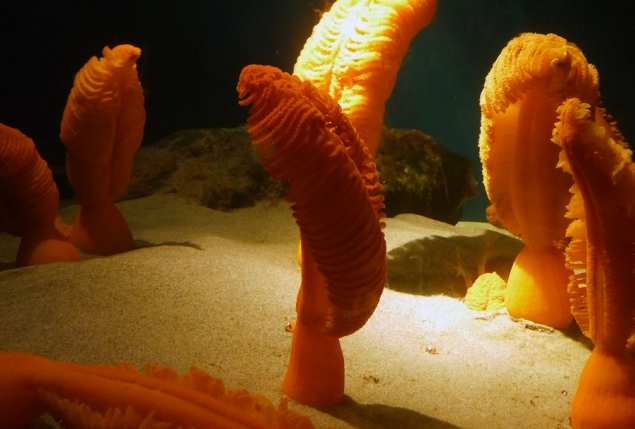
The Alcyonacea or "soft" corals do not develop the sturdy skeletons of their cousins and cannot build coral
reefs, but may be covered in tiny, horny skeletal particles called sclerites. These bizarre "sea pens,"
inhabitants of the deep ocean, consist of feeding polyps attached to a single large root polyp, which can turn
to face the current or even "uproot" from the mud and move about.
The Myxozoa
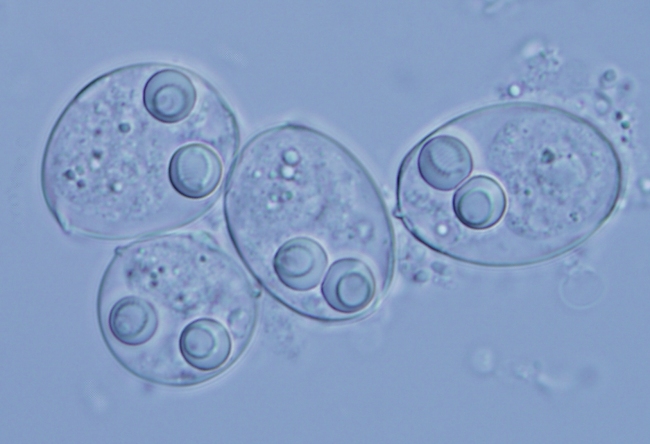
As strange as the Cnidaria may already be, the Myxozoa ("slime animals") are so unusual that they were long believed to be protozoa - entirely the wrong kingdom - until molecular analysis proved a direct relationship with the jellyfish, corals and other cnidaria. It's an understandable mistake, considering these "jellies" can consist of as little as a single cell and live as parasites in other animals; jellies who evolved into germs.
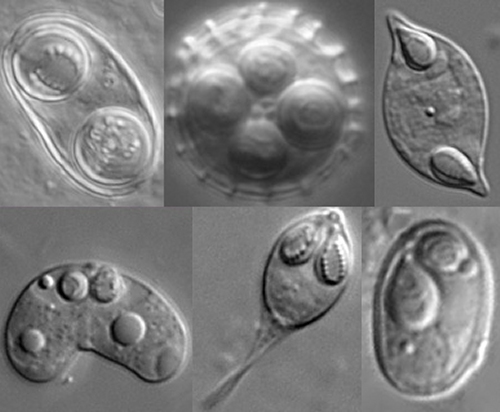
Most slime animals pass through two different hosts in their life cycle. Here, we see examples of myxospores, each of which contains at least one amoeboid infective cell and at least two "polar capsules," which seem to be modified, nonvenomous cnidoblasts. These sinister pods drift in water until they come into contact with a suitable invertebrate host - typically an annelid or a Bryozoan - and fire off their polar capsules, penetrating the host's skin for the amoeboid to pass through. Within the host, the amoeboid multiplies into a larger mass of cells or plasmodium, destroying host cells to produce their second type of spore:
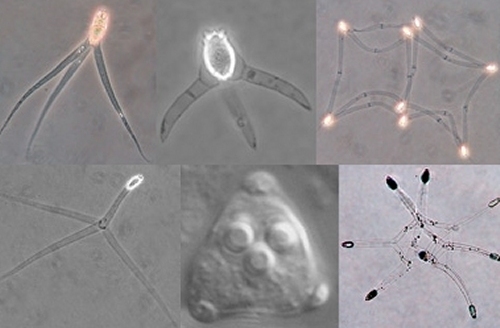
Actinospores work the same way as myxospores, but are adapted to infect larger vertebrate hosts. Most species attack fish, but a few are known to favor amphibians or aquatic reptiles, and at least one invades shrews. My favorite is the cube-like structure of connected rods. That's just weird. In larger hosts, the plasmodium can become visible to the naked eye, a concentration of thick, clear slime growing and feeding in the host's tissues. Some attack the muscles, some attack the heart, some even dwell within the spinal column, causing severe skeletal deformities and neurological damage. Thousands of spores are released once the host dies, with some species killing more than 90% of infected fish.
By now, you're familiar with the major groups of Cnidaria, in all their toxic, infectious, brainless glory, but I'm only half finished talking about them! Click below for my next article on these creatures: