For all their bizarre, sometimes grotesque adaptations, parasitic organisms are seldom
directly lethal to their hosts, having adapted to live in a careful balance with the animals they
depend on as food and shelter. Parasitoids, however, are a very different story. These are
defined as parasites which cannot complete their life cycle without the death of the host
organism, transitioning at some point from parasite, to predator. While many varied life forms
practice this sort of internal assassination, none are such devoted parasitoids as the insects
we call wasps.
directly lethal to their hosts, having adapted to live in a careful balance with the animals they
depend on as food and shelter. Parasitoids, however, are a very different story. These are
defined as parasites which cannot complete their life cycle without the death of the host
organism, transitioning at some point from parasite, to predator. While many varied life forms
practice this sort of internal assassination, none are such devoted parasitoids as the insects
we call wasps.
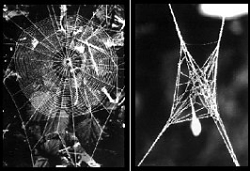
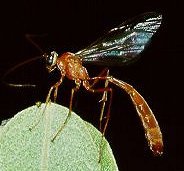
While there are many wasps devoted to attacking spiders, this particular species boasts an
exceptionally devious strategy. Targeting only the web-building spider Plesiometa argra, the
adult female lays a single egg on the host's abdomen. After up to two weeks of feeding on the
spider's blood, the larva administers a chemical to essentially reprogram the host's behavior.
It's normal for a spider to spin an entire new web on an almost nightly basis, but when our
parasitized spider begins its next construction project, something goes terribly, terribly awry; it
stops after the first few steps of the process and starts back at the beginning, repeating the
same actions until it has built only a tiny, dense, cocoon-like web. The spider traps itself within
this small prison, and waits motionlessly as the wasp consumes it and pupates within the
protective bag.
exceptionally devious strategy. Targeting only the web-building spider Plesiometa argra, the
adult female lays a single egg on the host's abdomen. After up to two weeks of feeding on the
spider's blood, the larva administers a chemical to essentially reprogram the host's behavior.
It's normal for a spider to spin an entire new web on an almost nightly basis, but when our
parasitized spider begins its next construction project, something goes terribly, terribly awry; it
stops after the first few steps of the process and starts back at the beginning, repeating the
same actions until it has built only a tiny, dense, cocoon-like web. The spider traps itself within
this small prison, and waits motionlessly as the wasp consumes it and pupates within the
protective bag.
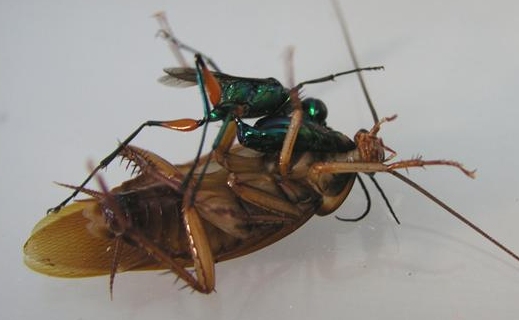
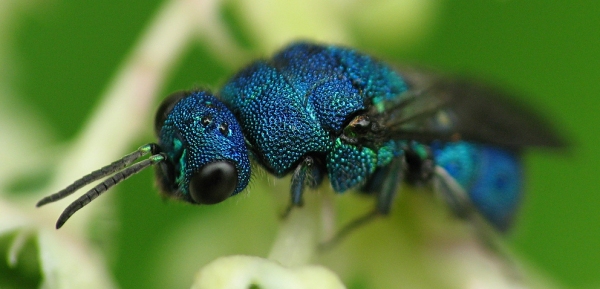
Also known as the emerald cockroach wasp, this mere invertebrate was administering
delicate brain surgery before our kind even started to bang rocks together. With a single jab
of her stinger, the female penetrates a cockroach's brain and destroys precisely the right area
to disable its escape reflex. Next, she need only tug her victim's antenna like a dog leash,
guiding it dumbly into her burrow. There, she lays a single egg on the host's body and seals
the tunnel entrance behind her. Over the next two weeks, the larval wasp will slowly eat the
apathetic cockroach alive, prolonging its life through the process by saving its most vital
tissues for last.
delicate brain surgery before our kind even started to bang rocks together. With a single jab
of her stinger, the female penetrates a cockroach's brain and destroys precisely the right area
to disable its escape reflex. Next, she need only tug her victim's antenna like a dog leash,
guiding it dumbly into her burrow. There, she lays a single egg on the host's body and seals
the tunnel entrance behind her. Over the next two weeks, the larval wasp will slowly eat the
apathetic cockroach alive, prolonging its life through the process by saving its most vital
tissues for last.
The parasitoid lifestyle may seem a tad sadistic to us humans, but at least their hosts are
usually granted the merciful embrace of death once the wasplings are done consuming
their entrails. Usually.
usually granted the merciful embrace of death once the wasplings are done consuming
their entrails. Usually.
While most humans are familiar with wasps as angry, colonial, pepsi-diving summer pests,
the majority of species are tiny, barely noticeable parasites of other insects or arachnids,
integral in the population management of their fellow arthropoda. For nearly any insect you
can name, a specialized wasp exists to destroy it from within, including every insect we
humans recognize as a crop pest. As you can read more about in my first ever article for
cracked.com, many forms of plant life have even evolved chemical signals to communicate
with parasitoid wasps as a natural extermination service.
While these eerie and elegant creatures number in the tens of thousands, I've selected just a
handful of the most famous and unusual examples for a small peek into their beautifully chilling
lives.
the majority of species are tiny, barely noticeable parasites of other insects or arachnids,
integral in the population management of their fellow arthropoda. For nearly any insect you
can name, a specialized wasp exists to destroy it from within, including every insect we
humans recognize as a crop pest. As you can read more about in my first ever article for
cracked.com, many forms of plant life have even evolved chemical signals to communicate
with parasitoid wasps as a natural extermination service.
While these eerie and elegant creatures number in the tens of thousands, I've selected just a
handful of the most famous and unusual examples for a small peek into their beautifully chilling
lives.
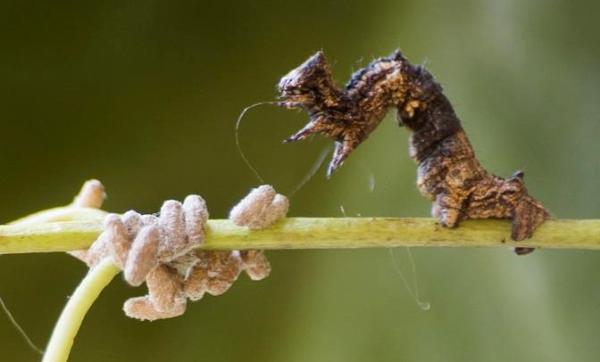
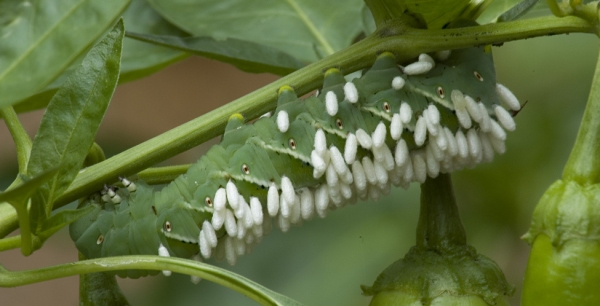
| A tomato hornworm with wasp cocoons (source) |
When larval Glyptapanteles wasps tunnel back out of their caterpillar host, they still need to
cocoon themselves and undergo metamorphosis into adults, leaving them open to attack
from any number of predatory insects - even fellow parasitoids looking to exact some ironic
justice. To better survive in this vulnerable state, at least a single wasp larva will remain
behind in the caterpillar's body, keeping their half-eaten, barely living victim under control as a
sort of "zombie" bodyguard.
Over the following weeks, the caterpillar will devote the last of its energy to protecting the very
things that were previously drilling through its innards, perched over the cocoons like an
otherworldly mother bird, blanketing them with its own silk and flailing madly to repel other
insects. By the time the wasps emerge as adults, their undead servitor - and the siblings still
controlling it - will finally perish. We still aren't certain how the wasps choose which larvae
remain in the caterpillar, but I personally like to think that it may be determined from birth,
making certain larvae a sort of specialized, zombie-piloting caste.
cocoon themselves and undergo metamorphosis into adults, leaving them open to attack
from any number of predatory insects - even fellow parasitoids looking to exact some ironic
justice. To better survive in this vulnerable state, at least a single wasp larva will remain
behind in the caterpillar's body, keeping their half-eaten, barely living victim under control as a
sort of "zombie" bodyguard.
Over the following weeks, the caterpillar will devote the last of its energy to protecting the very
things that were previously drilling through its innards, perched over the cocoons like an
otherworldly mother bird, blanketing them with its own silk and flailing madly to repel other
insects. By the time the wasps emerge as adults, their undead servitor - and the siblings still
controlling it - will finally perish. We still aren't certain how the wasps choose which larvae
remain in the caterpillar, but I personally like to think that it may be determined from birth,
making certain larvae a sort of specialized, zombie-piloting caste.
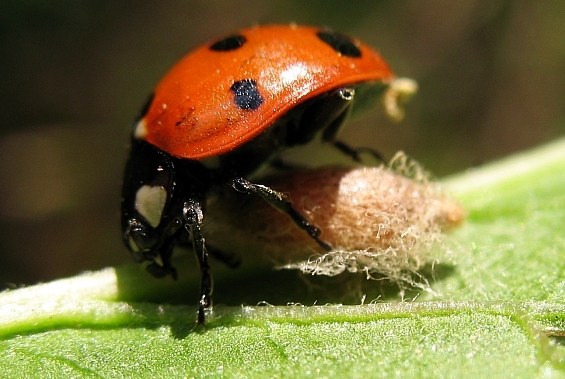
Another wasp employing a "zombie guard," D. coccinellae targets female ladybird beetles or
"ladybugs," one of mankind's arbitrarily favored arthropods. A single larva will develop in the
host's abdomen, breaking out through the posterior (ouch) and spinning a cocoon at the
ladybird's feet. The beetle is left in a paralyzed state through the pupation process, tightly
clutching the cocoon and convulsing at irregular intervals, discouraging not only predatory
insects but larger vertebrates as well; a ladybird's famously endearing polka dots didn't
evolve to make it cute, but to warn other animals that its contents taste like burning vomit.
"ladybugs," one of mankind's arbitrarily favored arthropods. A single larva will develop in the
host's abdomen, breaking out through the posterior (ouch) and spinning a cocoon at the
ladybird's feet. The beetle is left in a paralyzed state through the pupation process, tightly
clutching the cocoon and convulsing at irregular intervals, discouraging not only predatory
insects but larger vertebrates as well; a ladybird's famously endearing polka dots didn't
evolve to make it cute, but to warn other animals that its contents taste like burning vomit.
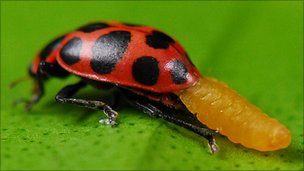
D. coccinellae is a tad less beneficial to us humans than other parasitoids, as ladybird
beetles are themselves an important predator of crop-destroying aphids. Fortunately, almost
a quarter of parasitized ladies make a surprising recovery from being eaten alive and
enslaved.
beetles are themselves an important predator of crop-destroying aphids. Fortunately, almost
a quarter of parasitized ladies make a surprising recovery from being eaten alive and
enslaved.
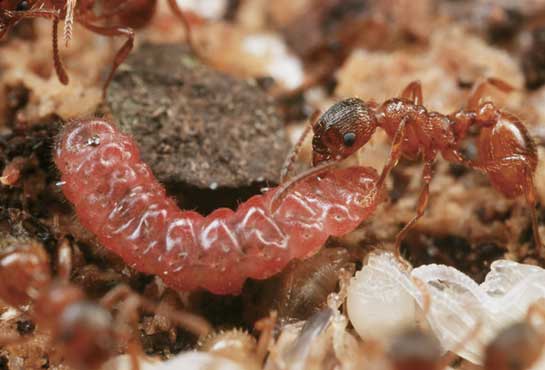
In my list of the coolest and strangest caterpillars, I described how the young Alcon blue
butterfly (above) goes undercover in the nests of ants, deceiving them into feeding and
protecting it as they would their own queen. While these crafty creatures are guaranteed
protection from most of their predators, a certain wasp happens to be quite a bit sneakier.
butterfly (above) goes undercover in the nests of ants, deceiving them into feeding and
protecting it as they would their own queen. While these crafty creatures are guaranteed
protection from most of their predators, a certain wasp happens to be quite a bit sneakier.
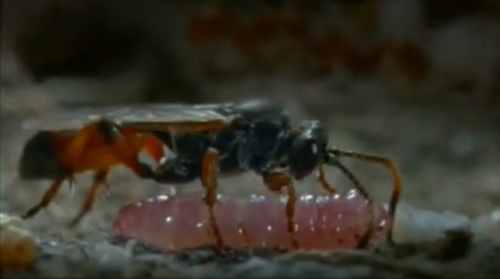
The female Ichneumon eumerus can smell the presence of blue butterfly larvae from well
outside an ant colony, and once inside, releases a pheromone to confuse the ants into
attacking one another. Slipping through the ensuing chaos, the wasp implants a single egg
into each freeloading caterpillar, granting her own young the protection of an entire ant army;
a parasite hidden in a parasite hidden in plain view.
outside an ant colony, and once inside, releases a pheromone to confuse the ants into
attacking one another. Slipping through the ensuing chaos, the wasp implants a single egg
into each freeloading caterpillar, granting her own young the protection of an entire ant army;
a parasite hidden in a parasite hidden in plain view.
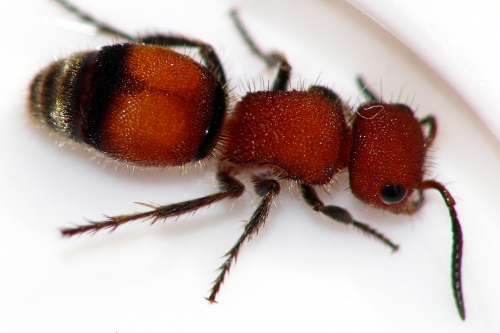
Common in dry, sandy climates, "velvet ants" are so named for the ant-like appearance and
dense fur of the larger, entirely wingless females, who pack a sting so painful they have also
been dubbed "cow killers" in parts of the United States. A lack of wings and an exceptionally
thick, rock-hard exoskeleton allows these brood parasitoids to withstand most attacks from
fellow bees and wasps, marching straight into their nests and laying their own eggs alongside
the host's. Velvet ant larvae will begin by feeding on host food provisions, moving on to
parasitize and ultimately consume the host larvae. Many of their victims are parasites
themselves, making some velvet ants hyperparasitic.
dense fur of the larger, entirely wingless females, who pack a sting so painful they have also
been dubbed "cow killers" in parts of the United States. A lack of wings and an exceptionally
thick, rock-hard exoskeleton allows these brood parasitoids to withstand most attacks from
fellow bees and wasps, marching straight into their nests and laying their own eggs alongside
the host's. Velvet ant larvae will begin by feeding on host food provisions, moving on to
parasitize and ultimately consume the host larvae. Many of their victims are parasites
themselves, making some velvet ants hyperparasitic.
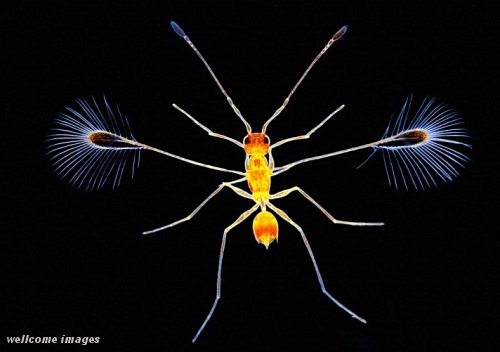
Also called fairy wasps or fairyflies, Mymaridae include the tiniest insects known to man, their
wings not so much sustaining their flight as simply steering them as they float through the air
like dust motes. Many species are even partially or fully aquatic, employing their wings as
swimming paddles. The small size of these "fairies" allows them to parasitize other insects
during the egg stage, laying several of their own within a single host egg. Young will mature
and even mate (with their own siblings) before breaking free of the host's egg shell, and target
such a diverse range of insects as beetles, grasshoppers, true bugs, flies and even lice.
wings not so much sustaining their flight as simply steering them as they float through the air
like dust motes. Many species are even partially or fully aquatic, employing their wings as
swimming paddles. The small size of these "fairies" allows them to parasitize other insects
during the egg stage, laying several of their own within a single host egg. Young will mature
and even mate (with their own siblings) before breaking free of the host's egg shell, and target
such a diverse range of insects as beetles, grasshoppers, true bugs, flies and even lice.
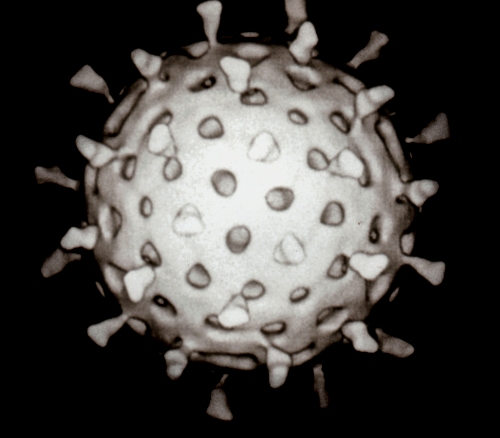
Polydnaviruses are found in a significant portion of braconid and ichneumon wasps,
themselves comprising the majority of parasitoid species. Far beyond your typical symbiosis,
the wasp's own DNA contains the complete genome of its respective polydnavirus,
information used by specialized cells in the wasp's reproductive system to assemble viral
bodies from scratch. These are injected into hosts alongside the insect's eggs, weakening
the victim's immune system and altering its metabolic processes in ways which benefit the
parasite.
Unlike independent viruses, polydnavirus particles lack the full genetic information necessary
to duplicate themselves, existing only when the time comes for the wasp's body to construct
them. The insect essentially retains exclusive rights to the complete viral "recipe," averting the
potential destruction of a precious host (or even its own larvae) were the virus to multiply on its
own.
Theories vary on how this relationship may have come about. It seems likely that an ancient
viral infection evolved a partnership with an early wasp host, while others have proposed that
wasp DNA evolved its own viral aspect, independently or from "borrowed" viral genes.
themselves comprising the majority of parasitoid species. Far beyond your typical symbiosis,
the wasp's own DNA contains the complete genome of its respective polydnavirus,
information used by specialized cells in the wasp's reproductive system to assemble viral
bodies from scratch. These are injected into hosts alongside the insect's eggs, weakening
the victim's immune system and altering its metabolic processes in ways which benefit the
parasite.
Unlike independent viruses, polydnavirus particles lack the full genetic information necessary
to duplicate themselves, existing only when the time comes for the wasp's body to construct
them. The insect essentially retains exclusive rights to the complete viral "recipe," averting the
potential destruction of a precious host (or even its own larvae) were the virus to multiply on its
own.
Theories vary on how this relationship may have come about. It seems likely that an ancient
viral infection evolved a partnership with an early wasp host, while others have proposed that
wasp DNA evolved its own viral aspect, independently or from "borrowed" viral genes.
Perhaps the most bizarre and startling characteristic of the parasitoid wasps isn't just their
gruesome method of childcare, their worldwide diversity, their symbiosis with plant life or
even the cerebral rewiring we've seen from several species, but their deeply, deeply intimate
relationship with another, far more ancient parasitic force.
gruesome method of childcare, their worldwide diversity, their symbiosis with plant life or
even the cerebral rewiring we've seen from several species, but their deeply, deeply intimate
relationship with another, far more ancient parasitic force.
| The Magical Lives of Parasitoid Wasps |
| ______________________________________________________________________________ |
| The Secret Weapon |
| ______________________________________________________________________________ |
| Ichneumon eumerus's inside inside job |
| ______________________________________________________________________________ |
| Dinocampus coccinellae & the indentured ladybug |
| ______________________________________________________________________________ |
| Glyptapanteles & the necropillar |
| ______________________________________________________________________________ |
| Ampulex compressa & the cockroach lobotomy |
| ______________________________________________________________________________ |
| Hymenoepimecis argyraphaga's spider straight jacket |
| ______________________________________________________________________________ |
| Mymaridae: invisible fairies of death |
| ______________________________________________________________________________ |
| Mutillidae: the flightless cuckoos |